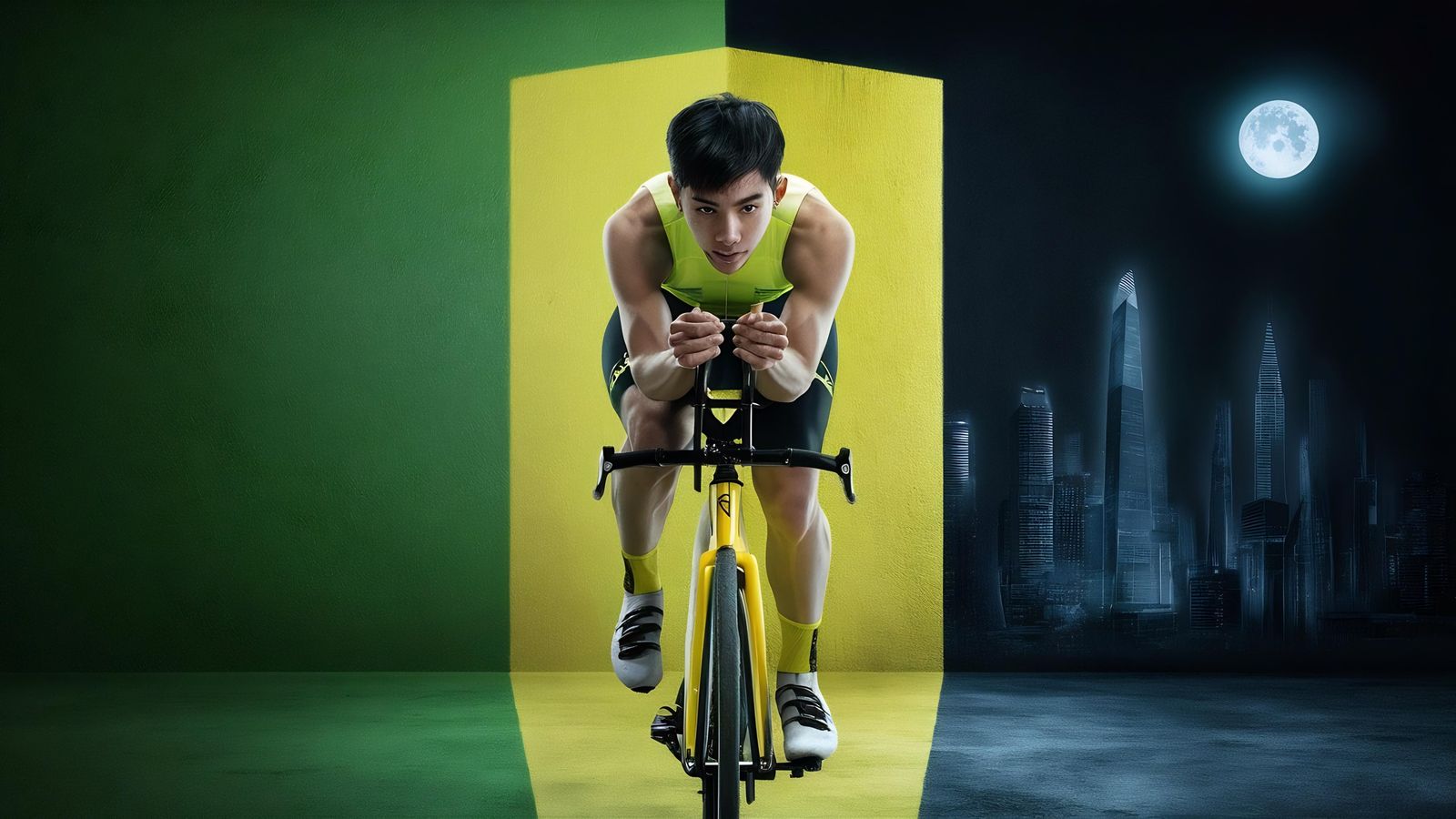
The split between riders who prefer solo structured sessions and those who thrive in competitive formats is one of the most consistent patterns in indoor cycling platform data. Neither mode is superior. But understanding why each mode works for the riders who prefer it reveals something useful about how motivation operates during physical training.
What Solo Mode Provides
Solo mode strips away external variables. The session has a defined structure. The cadence and resistance targets are visible. There is no clock ticking against another rider’s output. The only comparison happening is between your current performance and the targets the session specifies.
For riders who value predictability, this is precisely the point. When you start a solo session, you know what the session will ask of you. The warm-up duration, the number of intervals, the peak intensity window, the cooldown - all visible before the first pedal stroke. This removes decision fatigue and anxiety about the unknown.
The result is a training environment where the rider can focus entirely on execution. Am I hitting the cadence target? Is my resistance where it should be? Am I managing my effort across the session arc? These are internal questions, and they produce a mindful quality of attention that competitive riders rarely experience during matches.
Solo riders also tend to be more consistent in their training frequency. Without the psychological risk of losing a competitive match, there is less emotional friction associated with starting a session. The worst outcome of a solo ride is a session where targets were not fully met. The worst outcome of a competitive ride is a loss, which triggers a different emotional response entirely.
What Competitive Mode Provides
Arena mode introduces something solo mode cannot replicate: the knowledge that another rider is doing the same session at the same time and that your outputs will be compared.
For competition-responsive riders, this knowledge changes everything. Effort levels in competitive sessions are measurably higher than in solo sessions for the same rider doing the same session template. The external accountability of a matched competitor pushes riders past comfort zones they would respect in solo training.
The mechanism is straightforward. In a solo session, the rider’s internal governor says “this is hard enough” and allows cadence to drop or resistance to decrease. In a competitive session, that same internal governor is overridden by the awareness that dropping effort means falling behind. The session targets have not changed, but the rider’s relationship to them has.
Competitive riders also report that arena mode makes the time pass faster. Solo sessions can feel long during moderate-intensity middle sections. Competitive sessions create a sustained attentional engagement because the rider is tracking relative performance throughout, which eliminates the sense of time dragging.
Why Riders Cluster Into Preferences
The preference for solo or competitive mode correlates with personality traits that extend well beyond cycling.
Riders with high internal motivation tend toward solo mode. They set personal goals, track their own improvement over weeks, and derive satisfaction from executing a session well regardless of how anyone else performs. These riders are often consistent and methodical. They build routines and stick to them. They may ride five times a week for months without missing a beat, precisely because their motivation does not depend on an external input that might not be available on any given day.
Riders with high external motivation tend toward competitive mode. They perform better when observed, challenged, or compared. Their best efforts come under pressure. These riders may ride slightly less frequently than pure solo riders, but their peak sessions produce higher output because competition raises their ceiling.
A smaller group of riders actively uses both modes, switching based on energy level, schedule, and training goals. These riders tend to have the most balanced training profiles because they get the consistency benefits of solo mode and the intensity benefits of competitive mode within the same training week.
Using Both Modes Effectively
The most practical approach for most riders is to use solo mode as the default training backbone and competitive mode as a structured intensity stimulus applied one or two times per week.
Solo sessions on Monday, Wednesday, and Friday might focus on cadence consistency, recovery work, and steady endurance building. A competitive arena session on Tuesday or Saturday adds the intensity spike that prevents plateau without creating the accumulated fatigue that three or four competitive sessions per week would produce.
This pattern works because it aligns with how physical adaptation actually happens. Consistent moderate effort builds the aerobic base. Periodic high-intensity work pushes the performance ceiling. Rest between high-intensity sessions allows recovery and adaptation. The solo-competitive split naturally creates this training rhythm.
Riders who only use competitive mode risk burnout from sustained high-intensity training without adequate recovery structure. Riders who only use solo mode risk plateau from insufficient intensity challenge. The combination avoids both problems.
For more detail on how game modes work on the platform and how progression operates across modes, see the dedicated sections. The support team can also help riders who are unsure which mode configuration suits their training goals.